

If your dashboard shows a “Check Engine Coolant Level” warning, your first thought might be to open the radiator cap, but that can be dangerous, especially on a hot engine. The good news? You can safely use the coolant reservoir check engine coolant level without opening radiator. In this step-by-step guide, we’ll show you how to do it safely, why coolant levels drop, common warning signs, and essential car maintenance tips UAE drivers need to prevent overheating and costly engine damage. While maintaining your car, it’s also wise to check the accident history of your vehicle in the UAE to ensure there are no hidden issues that could affect its performance or cooling system. Regularly checking your coolant helps prevent overheating, engine damage, and costly repairs. In hot climates like the UAE, low coolant can quickly lead to blown gaskets, warped heads, or engine seizure.
Why Engine Coolant Is Crucial for Your Car’s Health
The engine coolant will be circulated in the engine, absorb the heat, and keep the temperature at an optimal level. At a point of dropping, overheating occurs- resulting in gasket failure, bending head, or even engine seizure. A low coolant level indicator is not to be neglected.


Ignoring a low coolant warning can seriously damage your engine, but checking it is easy and safe. Never open the radiator cap when the engine is hot; it can spray boiling coolant and cause burns. Use the coolant reservoir to check levels safely.
How to Check Engine Coolant Level Without Opening Radiator – Step by Step
This is a basic cooling system check:
Step 1: Turn off the engine and allow it to cool
Do not ever touch the radiator when it is hot. Wait 20-40 minutes.
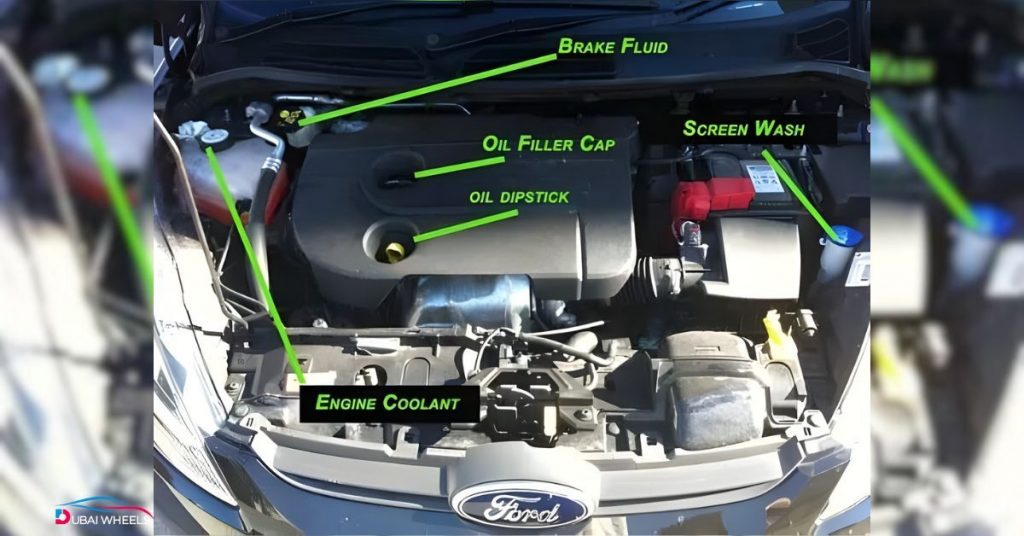
Step 2: Locate the coolant reservoir
A transparent plastic tank near the radiator, usually marked as “Coolant” or “Engine Coolant”.
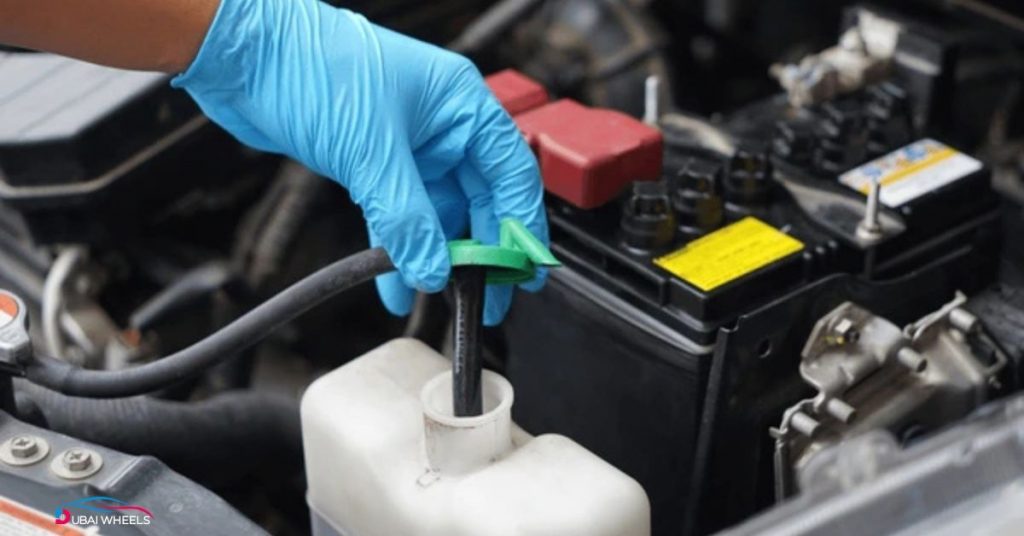
Step 3: Find the marks of LOW and FULL
- In case the coolant is between min and max, then you are good.
- In case of less than LOW, then topping up is required.
Step 4: Check the coolant color
- Depending on the type, healthy coolant is normally green, orange, pink, or blue.
- Coolant that is brown, milky, or rust colored indicates that the time has come to flush the coolant.
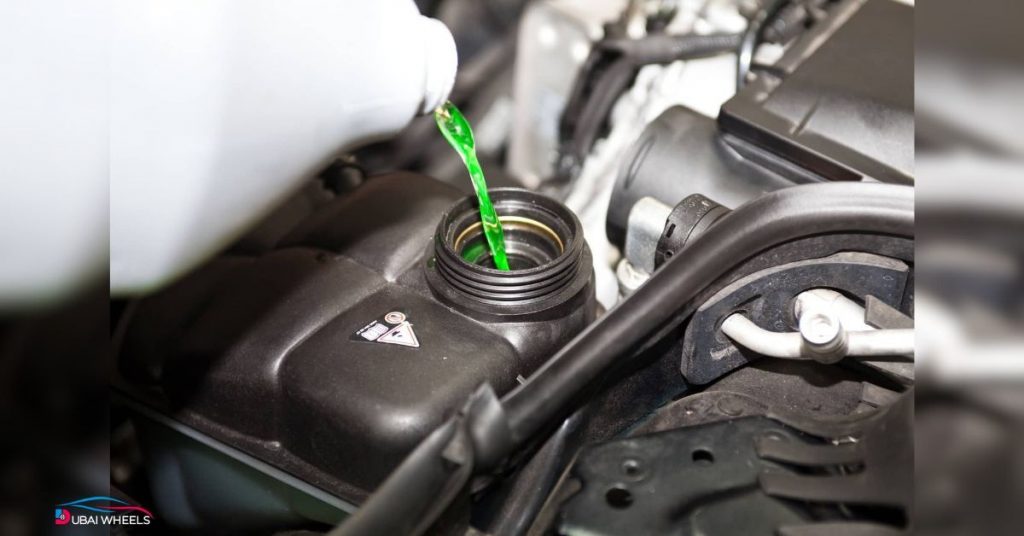
Step 5: Fill up via the reservoir only
Safe Top-Up Tips:
- After topping up, run the engine for 1 minute, let it cool, and recheck the level.
- Always use a funnel to avoid spills; coolant is toxic.
- Only add coolant when the engine is completely cool.
- If using non-premixed coolant, follow the manufacturer’s recommended ratio (usually 50/50 with distilled water).
- Never open the radiator cap when hot.
For recommended maintenance intervals and professional guidance on safely checking and topping up engine coolant, check out this expert coolant checking guide.
Coolant Reservoir vs Radiator – What’s the Difference?
| System | Purpose |
| Radiator | Actively cools the engine via coolant circulation |
| Coolant Reservoir | Stores extra coolant & allows expansion |
| Radiator Cap (Never Open When Hot – Engine Coolant Safety) | Maintains pressure in the cooling system |
Why Coolant Keeps Getting Low – Popular Reasons
It is possible to avoid a breakdown by knowing the cause.
| Cause | Description |
| Coolant evaporation | Hot weather or prolonged driving can cause coolant to evaporate. |
| Leaks in hoses, radiator, or reservoir | Damaged hoses, radiator cracks, or a faulty reservoir can cause coolant loss. |
| Faulty water pump | Water pump failure prevents proper coolant circulation. |
| Bad radiator cap | Loss of pressure can cause coolant to boil or leak. |
| Heater core leaks | Coolant leaks inside the heater core reduce level in the system. |
| Old or diluted coolant mixture | Degraded or improperly mixed coolant loses effectiveness. |
Coolant maintenance is even more significant to the UAE drivers who have to cope with summer heat in their vehicles. Sometimes, coolant may still drop after topping up due to leaks, internal engine issues, air pockets, or faulty components. Regular inspection and proper maintenance prevent recurring problems and costly repairs.
For added peace of mind, UAE drivers can also check their vehicle’s chassis number online instantly to confirm its history and ensure proper maintenance records.
How to Top Up Coolant the Right Way
Purchase the correct engine coolant (avoid antifreeze-only solutions). Use the recommended ratio, usually 50/50 coolant and distilled water, unless it comes premixed.
- Open the reservoir cap (never the radiator cap when hot).
- Slowly pour in coolant until it reaches the full mark.
- Close the cap, start the engine after 1 minute, and check the level again once the engine has cooled.
The following are easy rules of engine protection:
- Check the coolant every 2-4 weeks.
- Monitor the engine temperature gauge regularly
- Check the symptoms of coolant leaks, such as a sweet smell or damp areas under the car.
- Perform a coolant flush every 40,000-60,000 km
- Keep radiator fins clean
- Make sure that cooling fans are operational.
These steps of preventing vehicle overheating will help to avoid breakdowns on the road trip and in the UAE summers. For further detailed tips on safely checking coolant levels and choosing the right coolant mix, you can follow this complete guide on how to check coolant levels safely from an automotive expert outside source.
For UAE drivers, using the right engine oil is equally important to prevent overheating and ensure engine longevity—read our guide on the best engine oils for hot UAE weather for expert recommendations.
Indications of a Possible Overheating Car
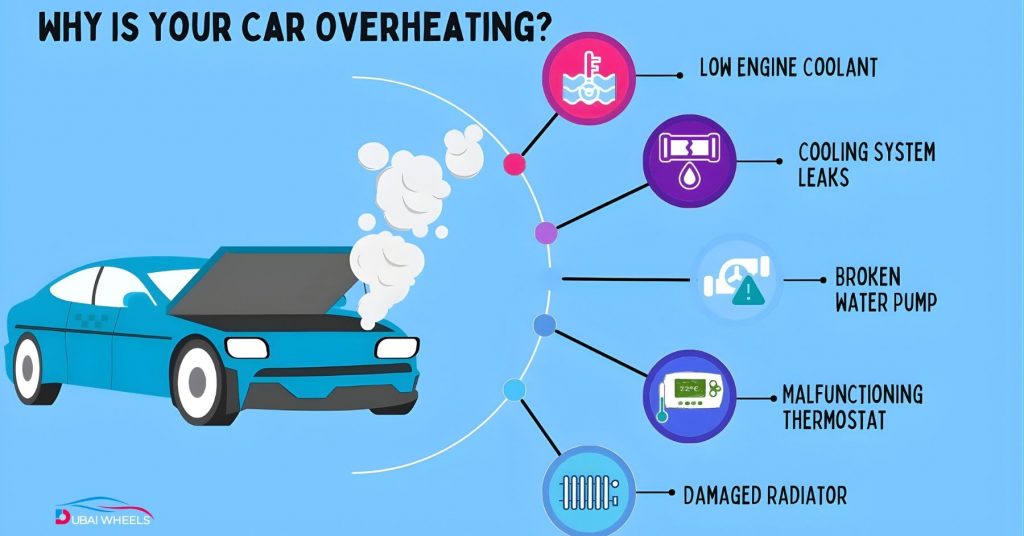
Raising of the temperature needle beyond the mid-point.
- AC turns weak suddenly
- Steam or smell from the bonnet
- Engine knocking sound
- Low alert dashboard coolant.
Stop driving if this happens. Further operation can irreversibly harm the engine.
Symptoms of Low Coolant Level – Don’t Ignore These Signs
- Rising engine temperature gauge
- Sweet smell from the engine bay (antifreeze)
- Low coolant dashboard warning light
- Weak cabin heater performance
- Gurgling or bubbling noises from the engine bay
- Visible leaks or colorful puddles under the car
Types of Engine Coolant
| Coolant Type | Recommended Use |
|---|---|
| IAT (Green) | Older vehicles, classic engines |
| OAT (Orange/Red) | Modern cars with aluminium components |
| HOAT (Yellow/Pink) | High-performance engines, hybrids, EVs, and modern turbo engines |
| Mixing Ratio | 50/50 with distilled water (70/30 in extreme cold), unless pre-mixed |
When to Go for a Coolant Flush?
You need a flush if:
- The coolant looks dirty or rusty
- Cooling performance is weak
- The heater is not working properly
- Coolant turns brown or oily
- The car has exceeded its service interval.
- A flush removes scale deposits and gets efficiency back.
Prevent Air Pockets and Maintain Coolant Efficiency
After topping up or flushing coolant, air can get trapped in the system, causing false low readings. To prevent this:
- Gently tap hoses while refilling
- Run the engine with the heater on to circulate coolant
- Ensure no leaks at the reservoir cap or hoses
- Always flush the system if switching coolant types or if the coolant appears rusty/dirty
Coolant Check Beginners: Rapid Recap
- No need to open the radiator
- Instead, use reservoir sight indicating marks.
- Top up only when the engine is cool
- Keep the coolant mixture in order.
- The cooling system should be maintained in a healthy state to prevent damage to the engine.
It is a safe method of checking coolant that makes the maintenance very easy, cheap, and free of any risk.
DIY Coolant Maintenance Tips for UAE Drivers
- Check coolant levels every 2-4 weeks
- Monitor the engine temperature gauge during the summer
- Inspect hoses, reservoir, and radiator for cracks or leaks
- Keep radiator fins clean and ensure cooling fans work
- Perform a coolant flush every 40,000-60,000 km or as per the manufacturer
- Avoid topping up with plain water unless in emergencies
For a complete overview of essential car maintenance tasks for UAE drivers, including cooling system checks, follow this handy checklist.
Final Thoughts
One of the most important car maintenance skills for beginner drivers is knowing how to check engine coolant level without opening radiator. This method saves time, prevents overheating, and keeps your engine running efficiently, especially in the UAE, where high temperatures are common. By following these coolant maintenance tips, you can extend your engine’s life and drive with confidence every day.
FAQs
Can I check the coolant level without opening the radiator cap?
Yes, simply inspect the coolant reservoir tank; the level should sit between the MIN and MAX marks.
How often should I check my coolant level?
Check it at least once a month, and more frequently before long drives or in hot climates.
What does it mean if my coolant level is low?
It may indicate evaporation, a coolant leak, or an issue in the cooling system that needs attention.
Is it safe to top up coolant myself?
Yes, as long as the engine is cool, never open the radiator cap when hot, and use the recommended coolant mix.
How do I know if my car has a coolant leak?
Look for puddles under the car, frequent low coolant levels, a sweet smell, or temperature warnings on the dashboard.
What happens if I drive with low coolant?
The engine can overheat, causing serious damage like a blown gasket or engine failure. Avoid driving until topped up.