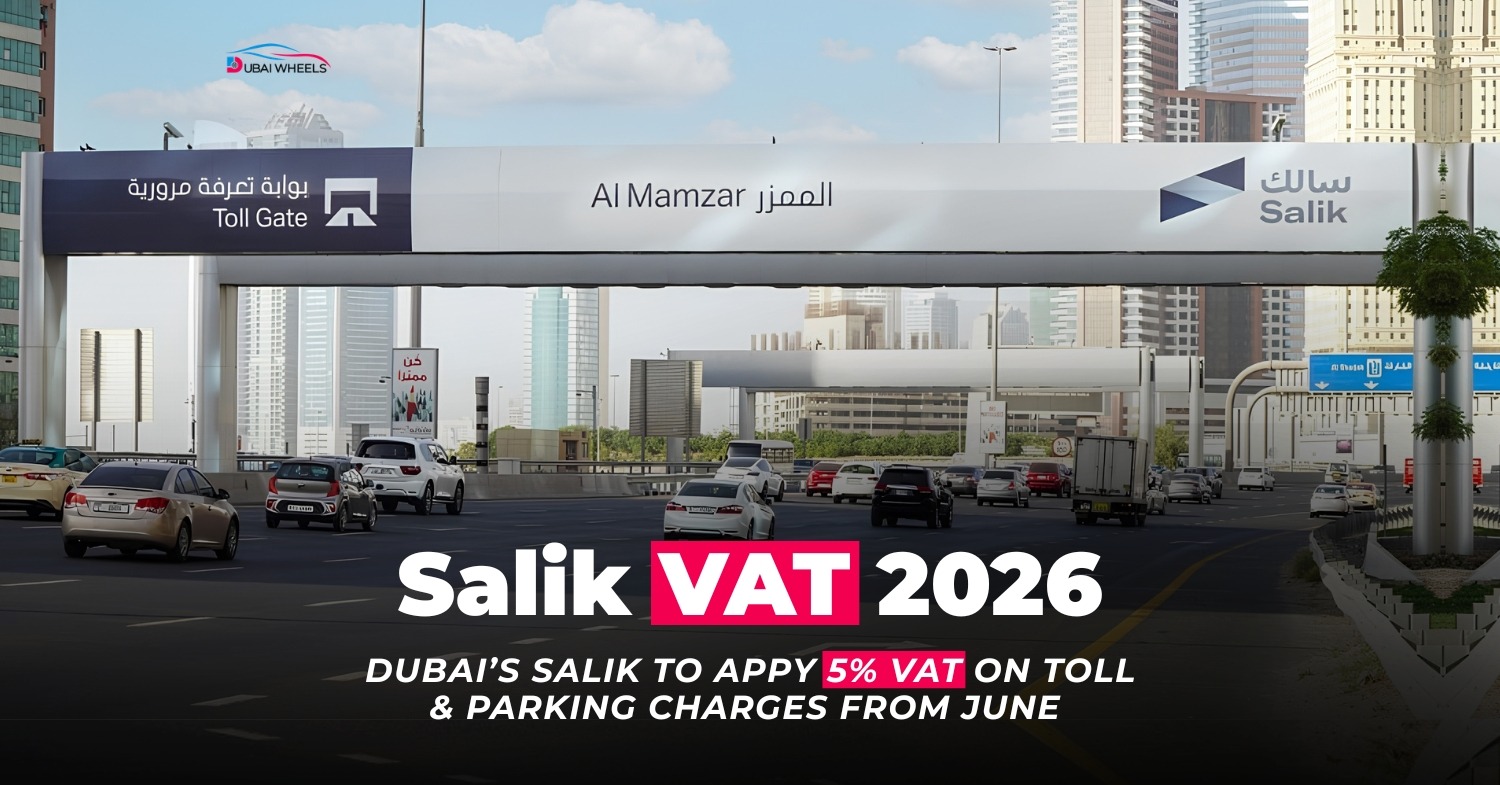

Dubai introduced updated Salik toll and parking VAT charges effective June 2026, impacting daily driving costs. The city persistently keeps informed of its transport networks to control traffic. Recently, major new rules hit the local transport system. Because of this change, drivers across the city notice small shifts in daily travel costs. Therefore, it is important to understand these new updates of Salik VAT June 2026.
A major tax rule went into effect on June 1, 2026. Both Salik and Parkin began adding a 5% Value Added Tax (VAT) to their services. This update helps transport operators follow the rules of the UAE Federal Tax Authority (FTA). Consequently, drivers will see slightly higher costs on tolls and parking spots.


This simple guide breaks down the new pricing structures for you. We cover everything from peak-hour toll rates to the new cashless parking rules. If you drive anywhere in Dubai, this information will help you plan your monthly budget easily. This specific layout is part of the official Salik VAT June 2026 system.
The New Toll Structure Broken Down
The electronic toll gates work very well across the city. However, the update adds a 5% tax layer on top of your normal fees. Motorists must make sure their accounts have enough money to cover these new rates. This change is a key part of the Salik VAT June 2026 rollout. To avoid unexpected deductions after the new VAT update, drivers should regularly monitor their toll wallet. You can learn how to do this easily in our guide on how to check Salik balance in the UAE using different methods.
The base toll prices themselves did not change. Instead, the extra 5% tax changes the final amount you pay at the gate. As a result, top and off-peak trips look vaguely different today.
Weekday Salik Charges (Monday to Saturday)
- Peak Hours (6:00 AM-10:00 AM & 4:00 PM-8:00 PM): The standard rate is AED 6.00. However, with the tax also included, you are now being charged AED 6.30 per crossing.
- Off-Peak Hours (10:00 AM to 4:00 PM & 8:00 PM to 1:00 AM): The base rate is AED 4.00. So the new fee would be AED 4.20 per crossing.
- Night Hours (1:00 AM-6:00 AM): You are still empty. As a result, there is no price or tax.
Sunday Salik Charges
- Normal Hours (6:00 AM–1:00 AM): AED 4.00 per crossing (before VAT).
- Night Hours (1:00 AM–6:00 AM): No toll charges apply during this period.
Also, the tax has been levied directly on the tag of the new vehicles.
Parking Updates and the Cashless Shift
The public parking provider, Parkin, implemented those same tax changes. After the Salik VAT June 2026 announcement, parking prices in Dubai areas are taxed 5% just as the rest of Dubai. These VAT changes apply to street parking, seasonal permits, and standard parking services.
| Parking Zone Type | Old Hourly Rate | New Rate with VAT |
| Standard Zone (Off-Peak) | AED 2.00 | AED 2.10 |
| Standard Zone (Peak Hours) | AED 4.00 | AED 4.20 |
| Premium Zone (Business Bay / Marina) | AED 6.00 | AED 6.30 |
| JLT Special Zones (Zones E & I) | AED 10.00 | AED 10.50 |
| 24-Hour Maximum Parking Cap | AED 40.00 | AED 42.00 |
In addition to the price shifts, Dubai reached a new milestone in smart governance. Parkin completely stopped cash payments at physical parking meters. Therefore, drivers must now use digital methods to pay. For example, you can apply your Nol card, the Parkin smartphone app, SMS codes, or the Dubai Now app. Parking rules in Dubai also change during special periods and holidays. For example, you can check how timings are adjusted in our detailed guide on Ramadan parking timings in Dubai 2026 and seasonal changes.
Who Does This Change Affect?
The modern toll updates affect many different road users. The system tracks your car automatically with smart tags. Therefore, the system calculates the tax based on real road use. It does not matter where you registered your car.
The rule directly impacts:
- Dubai residents who drive daily between homes and offices.
- Travelers often travel from Sharjah, Ajman, or Abu Dhabi.
- Delivery networks and commercial transport fleets.
- Taxis, ride-hailing apps, and rental car companies.
For businesses, tracking these receipts is now very important. Because these are official tax charges, VAT-registered businesses can claim this money back. Consequently, fleet managers should maintain accurate digital records for their monthly accounting. This tracking aligns with the rules of Salik VAT June 2026.
Real-World Commuter Case Study (Expert Analysis):
To understand the impact, consider a sample daily commute scenario. Consider an employee driving from Deira to Business Bay five days a week.
Before the policy shift, crossing four peak-hour gates daily cost AED 24.00. Also, eight hours of premium parking costs AED 48.00. This created a daily total of AED 72.00.
Under the current rules, four peak-hour tolls cost AED 25.20. Then, the premium parking session equals AED 50.40. So, the new daily total is now AED 75.60. Over a standard 22-day working month, the transport cost rises by roughly AED 79.20. While this is a minor shift for individual drivers, large delivery fleets face higher operational costs. Thus, they need precise budget planning.
Tips for Managing Your Road Expenses
Adjusting to new transport prices requires a bit of planning. Luckily, simple steps can help you save money on your daily routes.
First, consider changing your travel times. Shifting your drive by just thirty minutes can move your trip away from peak hours. This quick change saves you money on gate crossings.
Second, make full use of smart maps on your phone. Modern GPS tools can find alternative routes that bypass toll gates completely. This is very useful if your daily trip does not require fast highway driving.
Finally, check your automated accounts often. Driving through a toll gate with no money leads to automatic fines. Therefore, checking your balance weekly online prevents unexpected penalties. These rising transport costs are also influencing how people choose and own vehicles in the UAE. If you’re planning a purchase, see our breakdown of car ownership trends and costs in the UAE for 2026.
Summary of Key Regulatory Dates
Tracking important dates helps drivers stay safe from fines. The shift to the new tax system was smooth across the city.
The rollout followed a clear timeline:
- 1 June 2026: 5% tax comes into operation for all currently active toll gates and car parks.
- June 1, 2026: Physical parking meters will no longer accept coins, removing the cash payment method.
The current rule does not apply to past trips. Any road trips taken before the start of June remain untaxed. The system applies the tax strictly to transactions moving forward.
Common Questions About Salik & Parking VAT in Dubai
Is the base rate of the toll gates increasing?
No, the core price stays the same. The extra cost comes purely from the 5% value-added tax.
What happens to the money already sitting in my account?
Your current account balance is safe. The system will not tax funds deposited before the deadline. Only future gate crossings take the tax fee.
Can I still use coins to pay for street parking?
No, results in cash parking at rides here. Drivers will need to use digital options instead. These are the use of the Parkin application, SMS codes, Nolcards, or the Dubai Now application.
Does the VAT apply to vehicles registered outside Dubai?
It is for all the cars that are using the roads of Dubai; it does not matter in which emirate the car is owned.