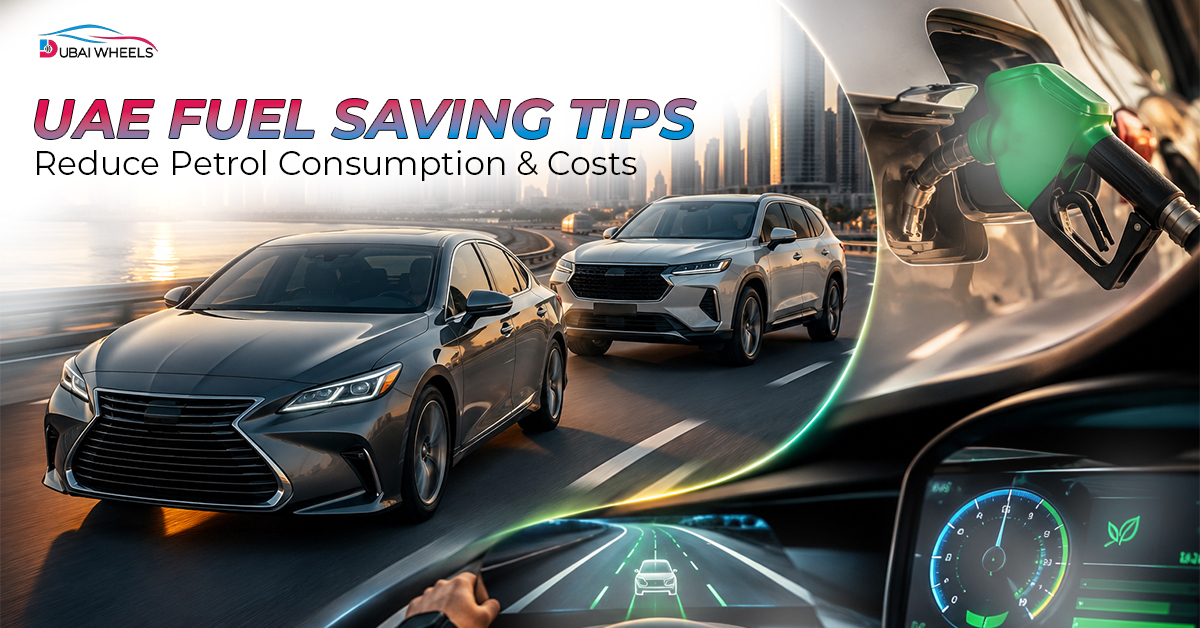

Crossing the magnificently paved highways of the United Arab Emirates is absolutely an extraordinary driving experience. However, for the UAE Fuel Price Agency, which assesses and adjusts petrol prices at the end of every month, controlling your monthly transportation funds can sometimes feel like a guessing game. Consequently, studying how to adjust your vehicle’s efficiency has converted from a minor consequence into an entire financial priority for residents throughout Dubai, Abu Dhabi, and the Northern Emirates. With monthly petrol prices changing across the UAE, improving fuel efficiency has become an effective way to reduce transportation costs that can be controlled by Fuel Saving tips. Drivers who want to understand the factors behind monthly fuel adjustments can also explore why UAE fuel prices change throughout the year. Fortunately, lowering fuel consumption does not require buying a new vehicle. Small changes in driving habits, vehicle maintenance, and fuel management can help drivers reduce petrol expenses while maintaining everyday convenience.
1. Master the Topography of UAE Highways
First and foremost, your driving form is the single best factor determining your car’s hunger for fuel. When you are speeding on major arterial associations like the E11 (Sheikh Zayed Road) or the E311, upholding a steady, expected velocity is paramount. Checking the latest UAE fuel prices regularly can also help drivers plan travel and manage monthly transportation expenses more efficiently.

Embrace the Cruise Control Factor
Utilizing your vehicle’s mixed cruise control during lengthy stretches among emirates is a perfect game-changer. Because instant micro-changes to the throttle destroy vast amounts of energy, a programmed speed lock conserves your fuel substantially. Therefore, setting your speed control completely at the lawful speed limit prevents excessive engine strain. As a result, you can easily boost your whole highway fuel saving by up to fifteen percent over time.
Avoid Aggressive Acceleration
Alternatively, repeated lane-weaving and destructive braking in dense metropolitan traffic are sure ways to sink your tank. Whenever you rush rapidly to close a pause in Downtown Dubai traffic, your machine burns an unequal amount of petrol. Instead, practice cautious driving by anticipating traffic streams early. By letting your vehicle coast obviously toward braking traffic, you reduce mechanical wear while naturally reducing consumption.
2. Defeat the Intense Summer Heat Efficiently
Controlling a vehicle in the Gulf region involves strategic management of climate control, particularly through the extreme summer months. Undeniably, running your air conditioning system puts an added load on your engine, which can reduce your normal productivity by approximately ten to fifteen percent.
| Driving Scenario | Window State | AC Status | Optimal Choice for Efficiency |
| Urban City Driving (< 60 km/h) | Open | Off | Yes — Reduces engine load at low speeds |
| Highway Cruising (> 100 km/h) | Closed | On | Yes — Aerodynamic drag hurts more than AC |
To illustrate this balance, taking with wide-open windows at high speeds results in great aerodynamic drag, turning your car into a parachute. Consequently, utilizing the climate control system efficiently while keeping your windows completely rolled up is actually far more reasonable on the highway. Furthermore, you can reduce initial cabin heat by applying windshield sunshades and space in shadowed basement structures whenever feasible.
3. Maintain Your Vehicle Like a Pro
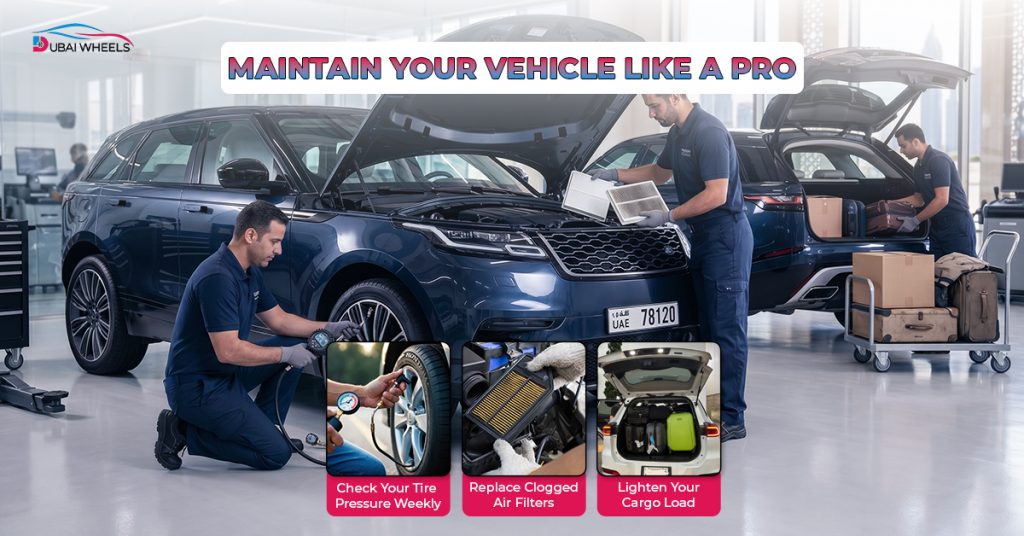
Outside of manual driving habits, an improved machine naturally needs far less energy to drive itself forward. Repeated vehicle maintenance shows as your primary insurance policy versus stealthy fuel loss.
- Check Your Tire Pressure Weekly: Confirming that your tires are inflated to the exact builder specifications reduces rolling resistance. If your drains are even vaguely under-inflated, your engine essential work twice as hard to continue basic cruising speeds.
- Replace Clogged Air Filters: Dust and select desert sand can rapidly accumulate in your engine’s intake system. Because a choked engine requires more petrol to uphold power, restoring dirty filters can directly improve your fuel economy by up to ten percent.
- Lighten Your Cargo Load: Several residents treat their large SUV trunks as lasting storage units. Since every extra 45 kilograms of burden increases fuel consumption by nearly one percent, straightening out heavy, pointless items yields important financial benefits.
4. Navigate the Petrol Pump Smartly
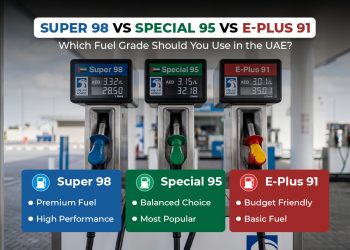
To circle out your strategy, you must understand how to approach the fueling station itself. Many motorists in the locality mistakenly believe that converting to premium Special 95 or Super 98 necessarily improves their fuel mileage. Reviewing UAE petrol price history can also provide better context for how fuel costs have changed over time.
Nonetheless, high-octane fuels do not offer any economic advantage unless your specific engine is openly tuned or turbocharged for it. Thus, observing strictly to the octane assessment recommended in your company owner’s manual is the best cost-effective path forward. In addition, think about downloading regional top-up apps that propose targeted rewards, cash-back partnerships, or loyalty programs to compound your funds over the financial year.
Studies on eco-driving generally show that smoother acceleration, maintaining steady speeds, and following fuel-efficient driving habits and maintenance practices can help reduce fuel consumption over time. Combined with proper vehicle maintenance, these habits may improve overall fuel efficiency over time. To estimate how much these driving improvements could affect your monthly expenses, try using a fuel cost calculator before and after adjusting your driving habits.
Frequently Asked Questions
How can I save fuel?
Fuel economy is improved by driving smoothly, clearing and lightening your vehicle where possible (trunk sorted empty, unneeded goods removed), and combining several short trips into one.
What reduces fuel consumption?
More frequent maintenance leads to less consumption; switching to the proper motor oil for your vehicle and keeping your air filters clean helps combat clogging that wastes fuel. Low-rolling-resistance tires and using the A/C at lower speeds lighten the load on your engine.
Does tire pressure affect fuel economy?
Yes! Under-inflated tires significantly increase the rolling resistance, which makes the engine work a lot more and consume more petrol. On average, avoiding under-inflated tires can lead to an increase of up to 3.3% in your overall gas mileage.
Best fuel-saving habits?
Just to name a few good habits: accelerate gradually, expect the highway speed, and use the cruise control and coasting early before RED lights. For longer stops, reducing unnecessary idling and using vehicle start-stop features where available may help lower fuel consumption.
How much fuel can be saved?
If you practice proactive eco driving before your gas pedal and keep your vehicle tuned, your vehicle‘s mileage can be reduced between 15 and 25 percent. And when on the highway, just lowering your speed from 120km/hr to 100 km/hr can help you save up to 20 percent. on your fuel bill.