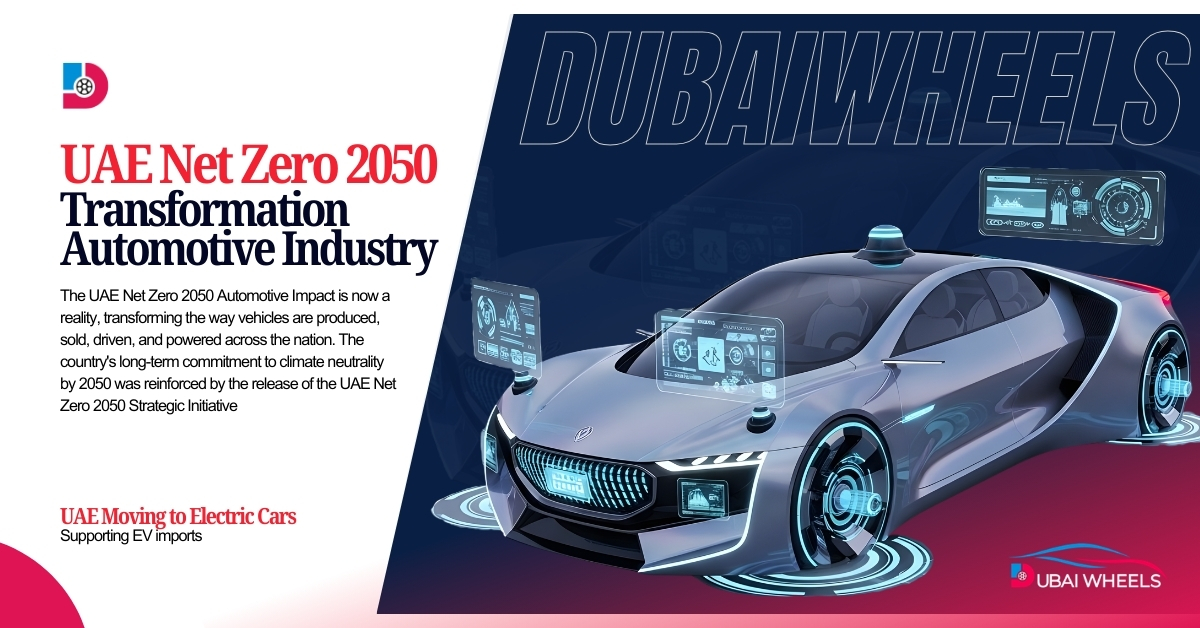

The UAE Net Zero 2050 Automotive Impact is reshaping the country’s automotive sector, changing how vehicles are manufactured, sold, and powered. Backed by the UAE Net Zero 2050 strategy, this government-backed initiative encourages EV adoption UAE-wide, renewable energy transport, and sustainable manufacturing. For car buyers, manufacturers, and investors, it signals a major shift toward a low-emission, technology-driven mobility future.
UAE Net Zero 2050 Strategy Explained: Impact on Transport and Automotive Sector
The UAE Net Zero 2050 plan is a government initiative that has been supported by the government to minimize the emission of greenhouse gases in all major sectors within the economy, such as the energy sector, the industrial sector, and the most crucial one, which is the transport sector. The UAE’s carbon emissions from transport make transport a priority of the UAE’s green mobility strategy.


Net Zero 2050 UAE Transport Sector: Strategic Roadmap for EVs and Sustainable Mobility
The Net Zero 2050 UAE transport sector roadmap is concerned with:
- Accelerating EV adoption UAE-wide to reduce carbon emissions.
- Expanding UAE EV charging infrastructure in cities, highways, and residential areas.
- Promoting zero-emission vehicles through awareness campaigns and incentives.
- Supporting hybrid vehicles in UAE as a transitional solution.
- Implementing strict fuel efficiency regulations for all new vehicles.
- Investing in green hydrogen UAE projects for heavy transport solutions.
This is not a policy document; it is a plan of industry change. If you’re unsure whether to choose an EV or a hybrid, read our complete comparison of EVs vs hybrids in UAE.
Is UAE Shifting to Electric Vehicles? UAE EV Policy Explained
Yes – and rapidly.
The electric vehicle policy of the UAE is fueling a tremendous increase in the adoption of EVs. The government is trying to urge individual and business fleets to change to cleaner solutions.
Under the UAE EV policy 2050, the government is supporting EV imports, expanding public charging infrastructure, fostering public-private collaboration, offering incentives in select emirates, and introducing EVs in taxis and government fleets. Check out the Hyundai Ioniq 5 features and variants available in UAE.
Read the official National Electric Vehicles Policy announcement by the UAE Ministry of Energy and Infrastructure to understand how the government plans to scale EV adoption and infrastructure across the country
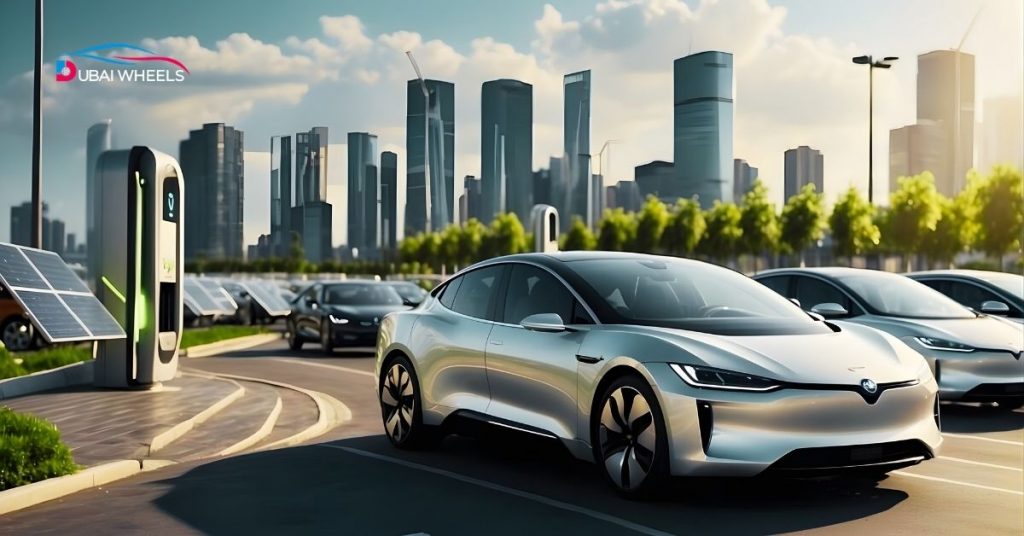
Popular electric vehicle models available in the UAE include Tesla Model 3, Nissan Leaf, Hyundai Ioniq 5, and BYD Atto 3, which are rapidly gaining market share as residents and businesses embrace EV adoption UAE-wide. Discover detailed specifications and pricing for the BYD Atto 3 in UAE.
For government and private fleets, these models are part of the transition toward low-emission mobility. Learn more about Nissan electric cars in the UAE and their growing presence in the market.
UAE EV Charging Infrastructure: Fast Growth of Infrastructure
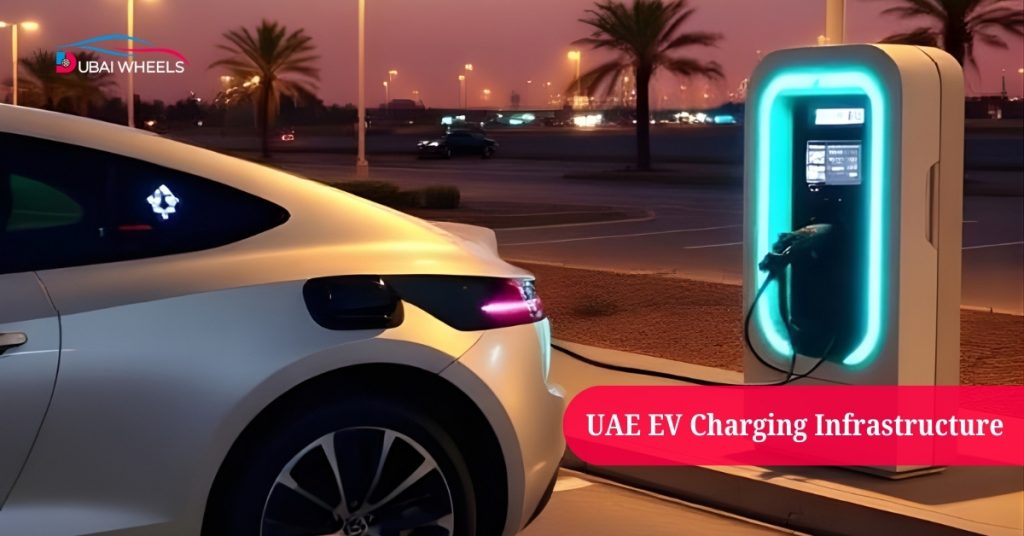
One of the main foundations of UAE transport decarbonisation is infrastructure growth.
Such cities as Dubai and Abu Dhabi have expedited the implementation of EV charging stations in:
- Residential communities
- Shopping malls
- Highways
- Office towers
- Public parking areas
The expansion of the UAE EV charging infrastructure is crucial to the development of customer trust and the mass EV uptake on the national level in the UAE. The point is evident: to make electric mobility convenient and accessible.
Will Petrol and Diesel Cars Be Banned in the UAE?
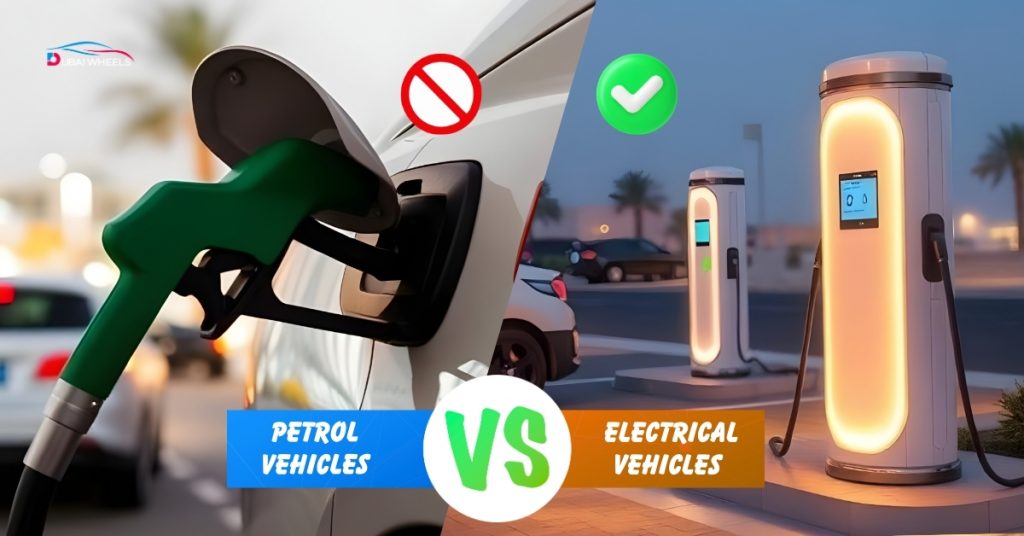
The question that is one of the most actively searched questions is: Will petrol cars be prohibited in the UAE? At the moment, no nationwide prohibition of petrol cars exists. Nonetheless, the UAE climate objectives 2050 show that there will be a gradual decrease in fossil fuel reliance by:
- Toughened emission regulations.
- Increased EV incentives
- Fleet electrification
- Hybrid cars Promotion in the UAE.
The country is not prohibiting it but is facilitating a gradual shift to cleaner mobility solutions. According to government reporting, the UAE has set a target for 50% of all vehicles on the road to be electric by 2050, aligned with its Net Zero 2050 strategy
Effects of Net Zero on the price of cars in the UAE
Impact of Net Zero on Car Prices in the UAE: Short-Term and Long-Term Outlook:
Short Term:
EVs may have higher upfront costs, infrastructure expansion drives investment, and battery imports affect pricing.
Long Term:
Falling EV battery technology costs, local sustainable manufacturing reduces imports, higher competition lowers prices, and fuel savings offset purchase costs.
Is the UAE Investing in EV Production?
Yes – the UAE is establishing itself as a high mobility center in the region.
The government is exploring:
- Green manufacturing alliances.
- Assembling of the EV and component manufacturing.
- UAE fuel projects using green hydrogen.
- Innovation and research on batteries
- Global cooperation with international brands.
This is beneficial to the larger UAE automotive sustainability strategy and effective placement of the country in the global clean mobility ecosystem.
Renewable Energy Transport: Green Hydrogen
In addition to electric vehicles, the UAE’s renewable energy transport projects are:
- Hydrogen-powered cars are green.
- Hydrogen-fuel refueling stations.
- Fueling stations powered by solar energy.
- Green logistics transportation.
The green hydrogen UAE projects are more relevant to heavy transport, trucks, and buses, in which the use of battery solutions is not always the best choice.
This diversification will provide flexibility in the attainment of carbon neutrality.
Sustainable Mobility in UAE: How Drivers Will Experience the Transition
The Sustainable mobility UAE push will imply that the drivers will experience:
- Smarter traffic systems
- More charging options
- Higher supply of zero-emission vehicles.
- Better fuel efficiency laws.
- Electronic vehicle care devices.
Mobility solutions are changing the car environment, whereby the old ownership of cars powered by fuel is changing to being technology-based.
The Future of Cars in the UAE 2050
By 2050, we can expect:
- The EV is widely adopted throughout the UAE.
- Hybrid cars in the UAE as in-between alternative.
- Commercial fleets powered by hydrogen.
- Smart transport networks that are fully integrated.
- Less emissions of carbon in the UAE.
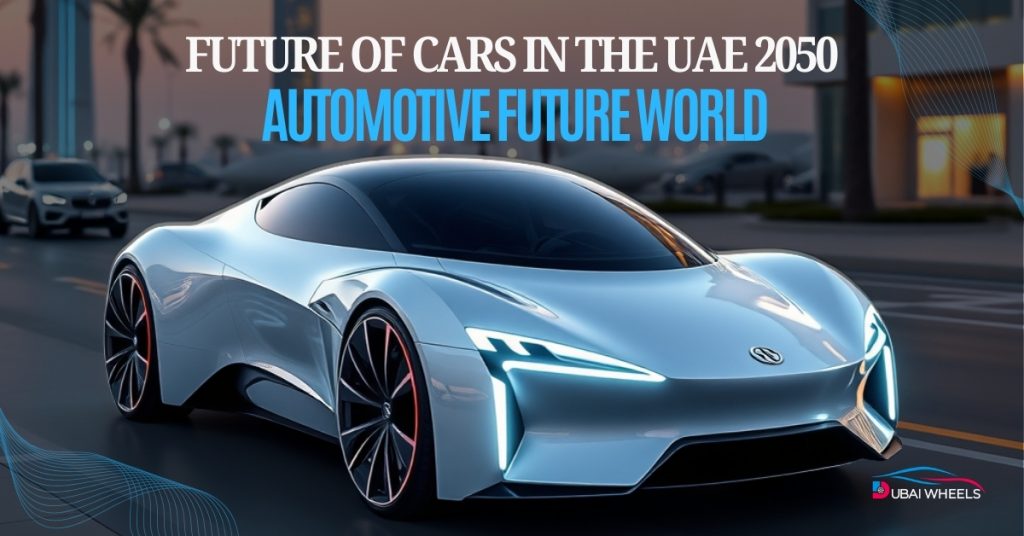
Leading brands contributing to this transformation include Tesla, Nissan, Hyundai, and BYD, offering models tailored for both private and commercial use in the UAE, supporting the shift toward zero-emission vehicles and sustainable mobility. The policy of EV in the UAE is in a language easily understood: Switch to low or zero-emission vehicles and abandon the high-emission vehicles without affecting the economic growth.
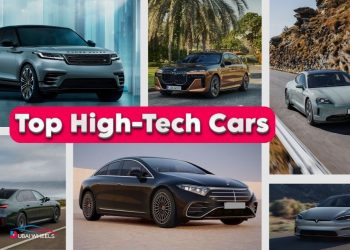
See our roundup of the top high-tech luxury EVs in UAE to know which models are leading the innovation.
Breakdown: What This Means to the Auto Industry
The UAE Net Zero 2050 Automotive Impact contains:
1. Dealership Transformation
Additional EV dealerships, battery knowledge, and online sales.
2. Market Shift
Increase in the demand for electric vehicles in the UAE from 2026 onwards.
3. Industry Transformation
Firms in the automobile industry have to be in line with the UAE’s decarbonisation of transport.
4. Infrastructure Expansion
Fast adoption of charging stations and hydrogen projects.
5. Carbon Neutrality Focus
All the policies are long-term commitments to climate and carbon neutrality.
Final Thoughts
The UAE Net Zero 2050 plan is not merely an environmental program, but is a strong economic and industrial revolution. UAE Net Zero 2050 Automotive Impact will transform the way cars are manufactured, powered, sold, and operated. While petrol cars won’t disappear overnight, the UAE is rapidly shifting toward electric, hybrid, and hydrogen vehicles. For car buyers, businesses, and investors, the takeaway is clear: the future of mobility in the UAE is electric, sustainable, and technology-driven.
FAQs
What is the UAE Net Zero 2050 strategy?
The UAE Net Zero 2050 strategy is a government-backed initiative aiming to achieve carbon neutrality by 2050 by reducing emissions across energy, transport, and industrial sectors.
How does Net Zero 2050 affect the automotive industry in the UAE?
It drives EV adoption UAE-wide, expands charging infrastructure, strengthens fuel efficiency regulations, and accelerates the shift toward zero-emission vehicles.
Will petrol and diesel cars be banned in the UAE?
There is no official nationwide ban yet, but the UAE is gradually reducing fossil fuel dependence through stricter emissions standards and EV-focused policies.
How many EV charging stations are there in the UAE?
The UAE has thousands of public and private charging points, with continuous infrastructure expansion in Dubai, Abu Dhabi, and other emirates.
Is the UAE manufacturing electric vehicles locally?
The UAE is exploring EV manufacturing, sustainable automotive partnerships, and battery technology investments to support long-term mobility goals.
Are electric cars cheaper to run in the UAE?
Yes, EVs are generally cheaper to operate due to lower electricity costs, reduced maintenance, and fewer moving parts compared to petrol vehicles.